Enrique Marty Spain, b. 1969
Cycle II — Volcanic Landscapes
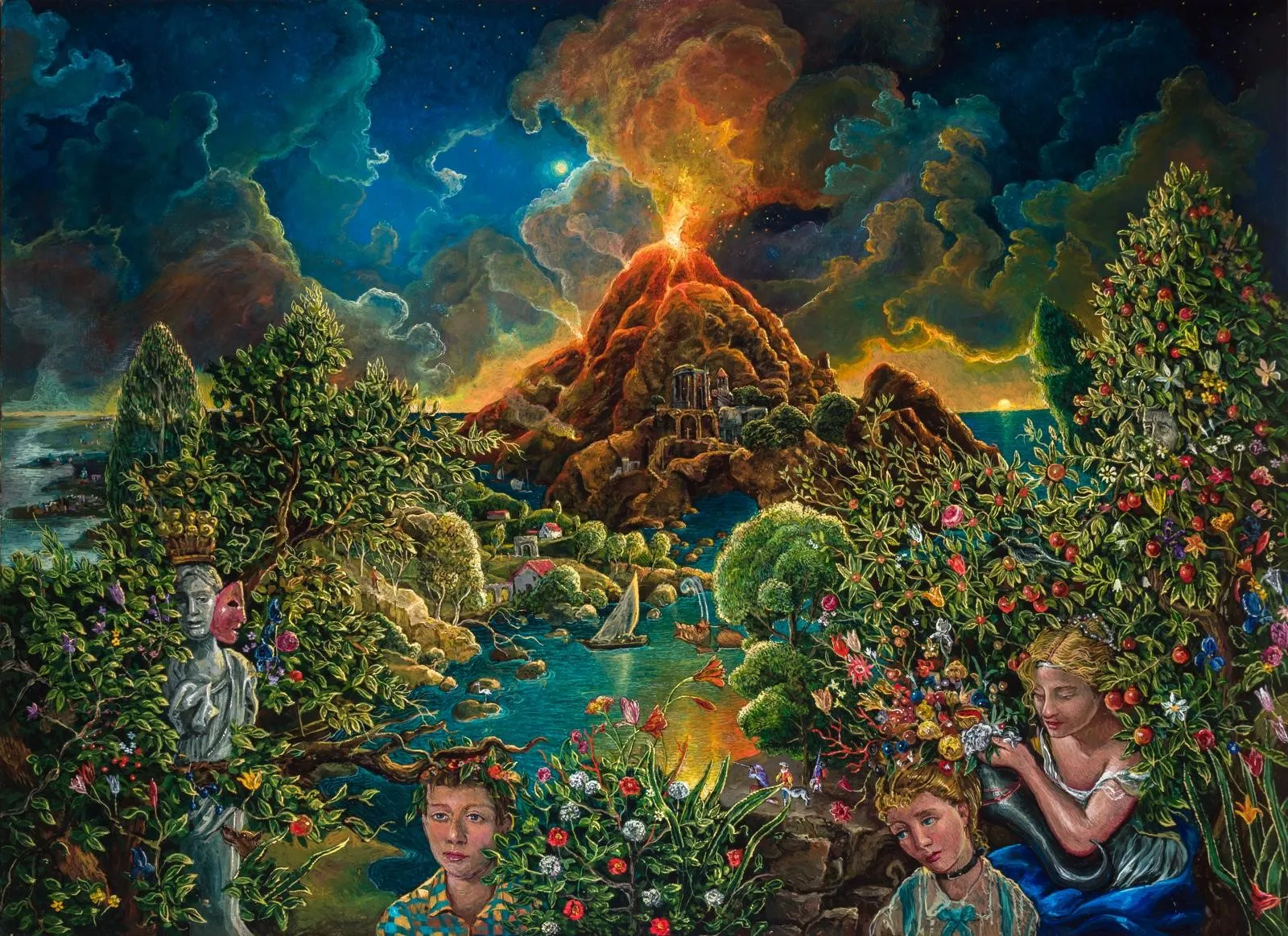
The second cycle shifts from organic growth to geological force. Volcanic eruptions, lava flows and ruptured terrains introduce a landscape governed by pressure, het and transformation.
These images resonate with the tradition of catastrophic landscape, from classical mythological scenes to Romantic visions of the sublime. However, here catastrophe is not spectacle but condition. The eruption is not an exceptional event but a structural aspect of the world.
Human figures appear scattered across the compositions as abservers, witnesses or travelers. They do not dominate the landscape; they move within it, exposed to forces beyond their control. Architecture and settlements appear provisional, fragile against the scale of geological change.
Water, fire and land intersect in unstable equilibrium. The landscape becomes a field of competing elements, each capable of dissolving the others. Time enters the image not as duration but as rupture--irreversible change.
In this cycle, the storm becomes vsisible as tranformation: a world in which stability is always temporary.